Sichuan Province, China · Location Feature
Sanxingdui — China's Most Mysterious Bronze Age Civilization
Towering bronze masks, a 4-meter golden tree, and six sacrifice pits buried for 3,000 years. Most of the site has never been touched.
Found by a Farmer, Ignored for a Decade
In 1929, a farmer named Yan Daocheng was clearing an irrigation ditch near Guanghan, Sichuan, when his tools struck jade and stone artifacts buried just below the surface. He quietly sold the pieces, and the find went largely unreported. It would be another five decades before archaeologists returned in force.
The watershed moment came in 1986, when workers at a brick factory accidentally unearthed what became known as Sacrifice Pits 1 and 2 — two rectangular pits packed with deliberately smashed and burned bronze artifacts, ivory, jade, and gold, all ritually deposited by a civilization that had left no written records and bore little resemblance to the contemporaneous Yellow River cultures historians had long taken as the cradle of Chinese civilization.
The academic world was stunned. Sanxingdui rewrote the map of Bronze Age China overnight, confirming that complex, highly sophisticated urban cultures had flourished far beyond what any textbook had acknowledged.
Where Is It?
Sanxingdui ("Three Star Mounds") lies in the Chengdu Plain, roughly 40 km north of Chengdu in Guanghan, Sichuan Province. The walled city covers approximately 12 km², with a dense inner core near the Mamu and Ya rivers.
The Name & The Culture
The site is attributed to the ancient Shu people — a kingdom mentioned in fragmentary later texts but whose origins, language, and relationship to other Bronze Age cultures remain hotly contested. Shu is not Shang. These people were something else entirely.
What Has Been Unearthed
The two 1986 pits alone yielded over 1,700 objects. Six more pits discovered between 2020 and 2022 have pushed that number dramatically higher, with analysis still ongoing. The artifacts defy easy categorization within any known Bronze Age tradition.
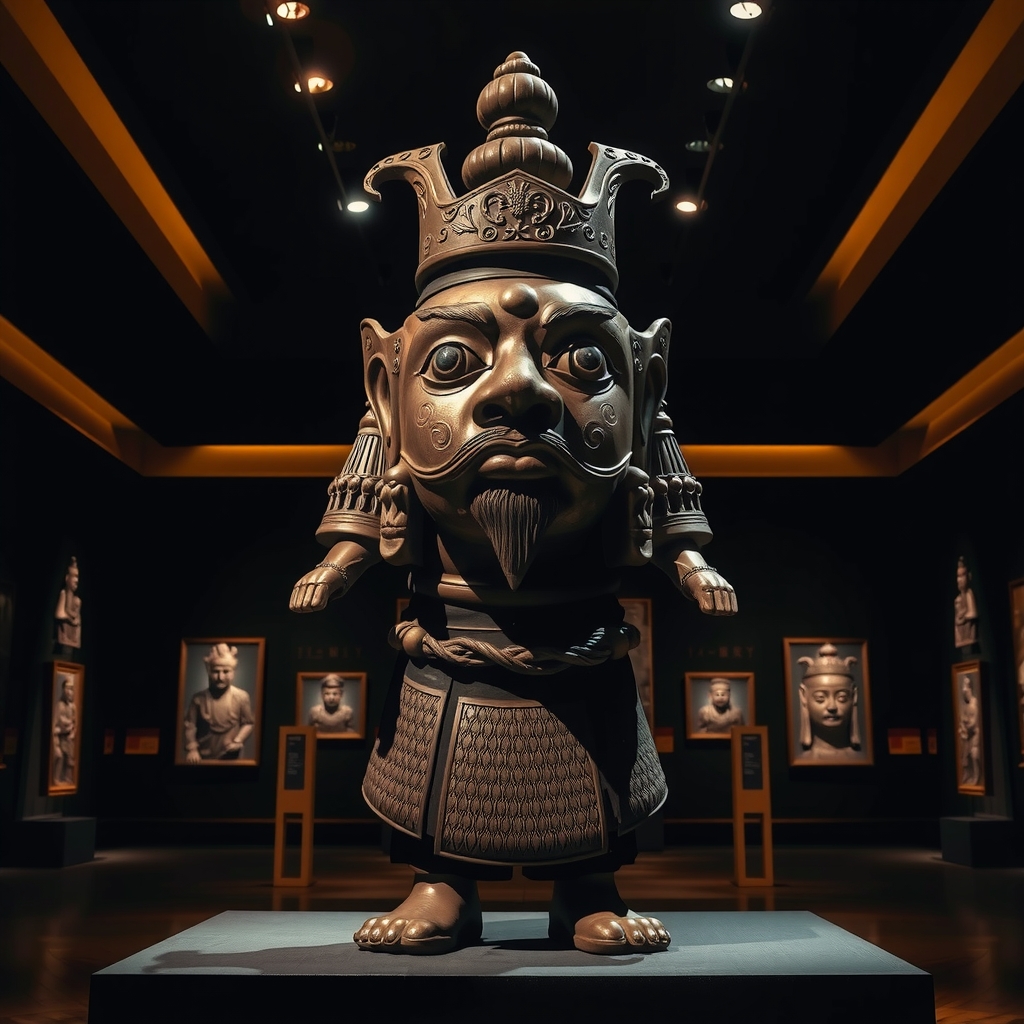
Monumental Bronze Masks
Some masks exceed 1.3 meters wide. Protruding eyes, flanged ears, and elongated faces suggest a visual vocabulary with no parallel in Shang dynasty art.
The Bronze Sacred Tree
At nearly 4 meters tall, this is the largest known Bronze Age tree sculpture on Earth. It depicts a cosmic world-tree with birds, draping branches, and a serpentine creature coiling down its trunk.
Standing Human Figure
A 2.62-meter bronze statue — the tallest known Bronze Age human figure in the world — stands on an ornate pedestal, hands forming a hollow grip around an unknown now-vanished object.
Gold Foil & Gold Scepter
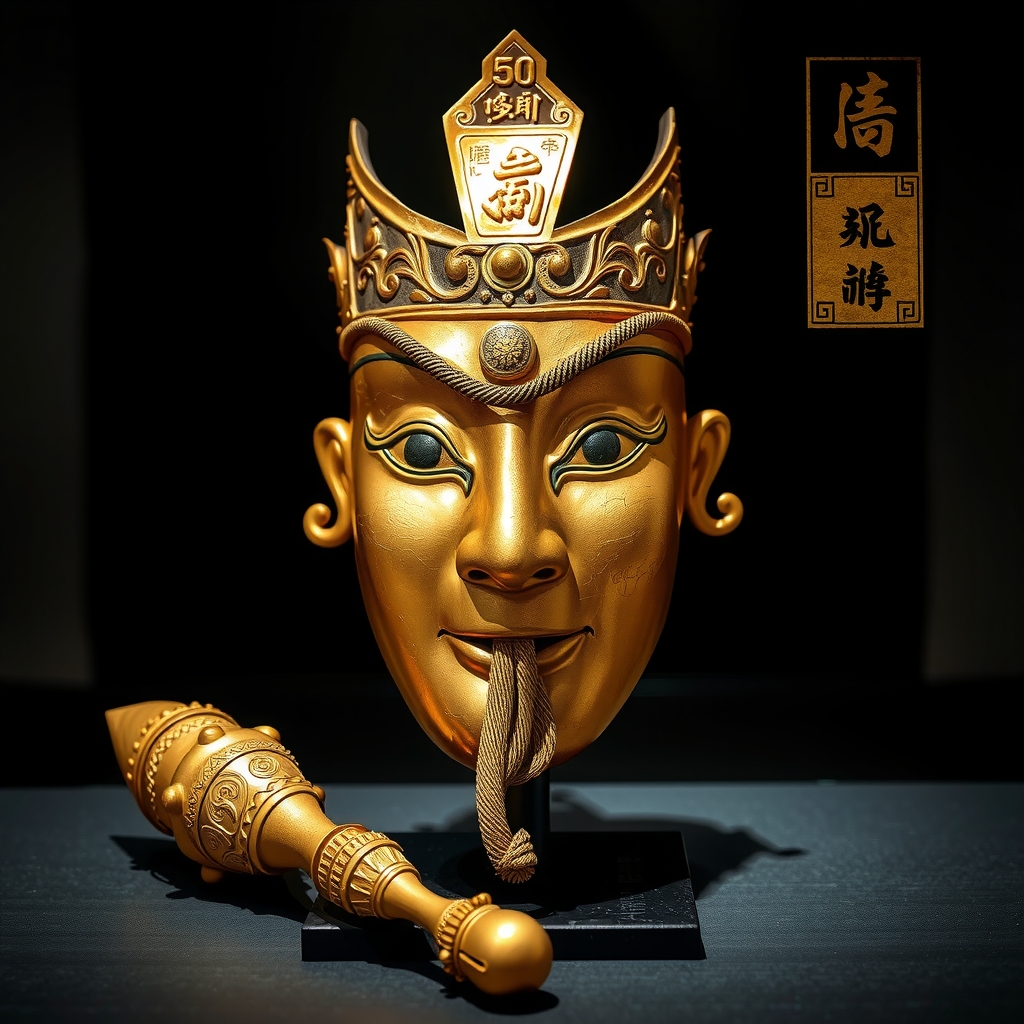
A gold scepter 1.42 meters long and gold foil sheets pressed over bronze heads suggest a ruler-priest class expressing power through precious metals in ways unique to this culture.
Ivory & Organic Materials
More than 100 elephant tusks have been recovered from Pit 3 alone. Their origin — local or traded — is one of many unresolved questions about Sanxingdui's long-range connections.
Jade & Stone Ritual Objects
Cong, bi discs, zhang blades — jade forms shared with distant Liangzhu and Longshan cultures — hint at a pan-regional ritual network nobody had previously imagined at this scale.
Six New Pits. Thousands of Objects Awaiting Analysis.
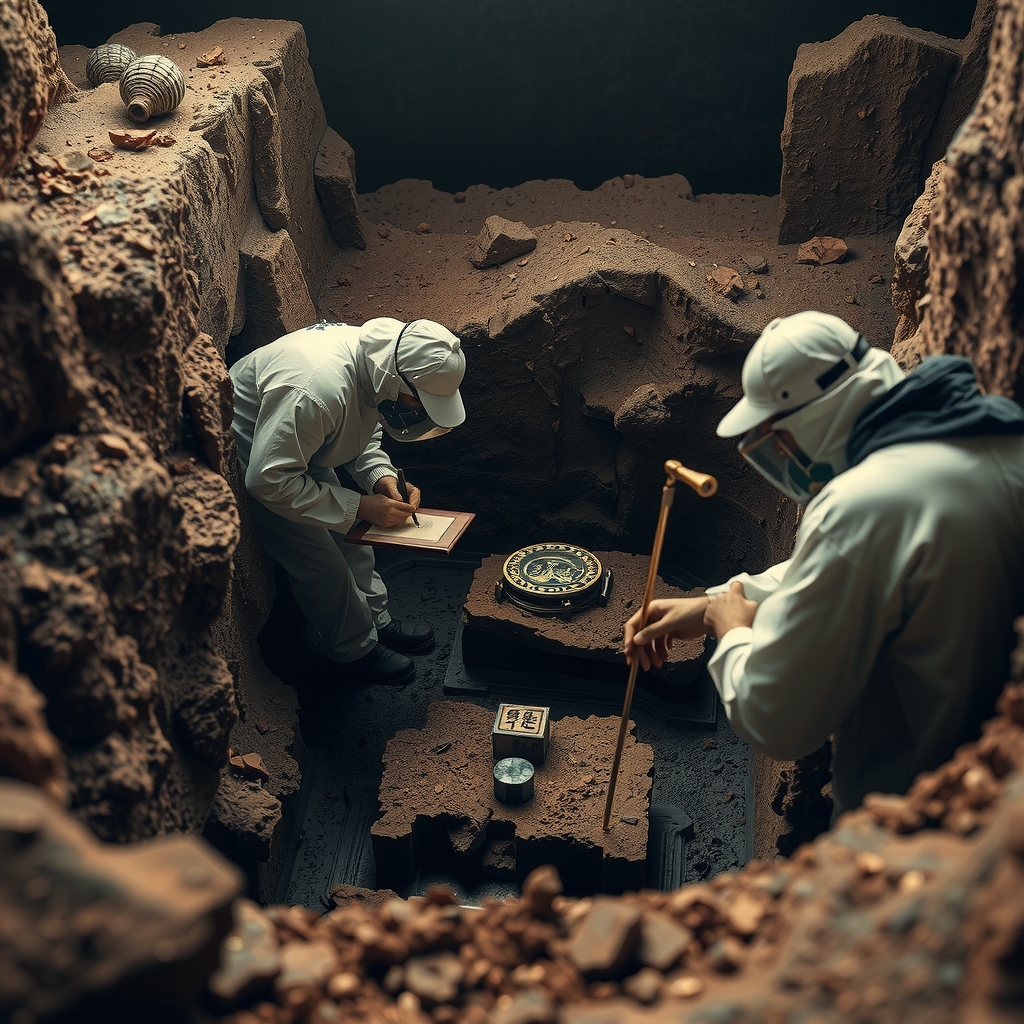
Between 2020 and 2022, archaeologists using ground-penetrating radar and controlled excavation revealed six additional sacrifice pits (Pits 3–8). Work is ongoing and painstaking — the new pits sit beneath a sealed climate-controlled dome to prevent degradation.
Even with modern tools, the site's sheer density of buried material means that only a tiny fraction of the walled city has been formally excavated. The broader urban core — city walls, residential zones, workshops — remains almost entirely beneath the Chengdu Plain farmland.
Organic materials in the new pits include silk residues, which if confirmed would push the known presence of silk in Sichuan back by centuries. Thermoluminescence dating of burned objects and AMS radiocarbon dating of ivories are still producing results as of the most recent published reports.
Key Scholarly References
- Bagley, R.W. (2001). "Sanxingdui and Shang China." In Ancient Sichuan: Treasures from a Lost Civilization. Seattle Art Museum / Princeton University Press.
- Xu Chao & Wang Fang (2022). "New Discoveries at Sanxingdui: Pits 3–8 and Their Implications." Chinese Cultural Relics, Vol. 9, No. 1–4. Cultural Relics Press, Beijing.
- von Falkenhausen, L. (2003). "The External Connections of Sanxingdui." In A Bronze Age without Bronze?. Special Issue, Asian Perspectives, 42(1).
- Sichuan Provincial Institute of Cultural Relics and Archaeology (2022). Sanxingdui Sacrificial Pits Excavation Report 2020–2022. Cultural Relics Press, Beijing.
- Flad, R. & Chen, P. (2013). Ancient Central China: Centers and Peripheries along the Yangzi River. Cambridge University Press, pp. 211–267.
A Century of Gradual Revelation
1929
Farmer's Accidental Find
Yan Daocheng strikes jade and stone artifacts while digging near Guanghan. Objects are sold; formal investigation is minimal.
1934
First Academic Survey
Yenching University archaeologist David Graham conducts a limited survey and identifies the site's significance, though excavation resources are unavailable.
1963–1980
Sporadic Investigations
Intermittent regional surveys map the extent of the walled city area, uncovering pottery and minor finds, but no sacrifice pits.
1986
Sacrifice Pits 1 & 2 Discovered
Construction workers expose the first two pits. Emergency excavation yields over 1,700 objects and rewrites Chinese archaeological history.
1997
Sanxingdui Museum Opens
Purpose-built museum opens on site, housing major finds and enabling ongoing conservation and study.
2020–2022
Pits 3–8 Revealed
Ground-penetrating radar and careful survey reveal six additional sacrifice pits. International excavation teams begin methodical, climate-controlled work under a protective dome.
2023–Present
Ongoing Analysis
Radiocarbon dating, silk residue testing, and bronze alloy analysis continue. Publication of comprehensive excavation reports is underway. The broader city remains unexcavated.
The Archive Keeps Growing
Sanxingdui is one of dozens of sites in our database where the ground holds more than scholars have yet retrieved. Explore the full record of what remains unexcavated.
Browse the Database Unsolved Mysteries