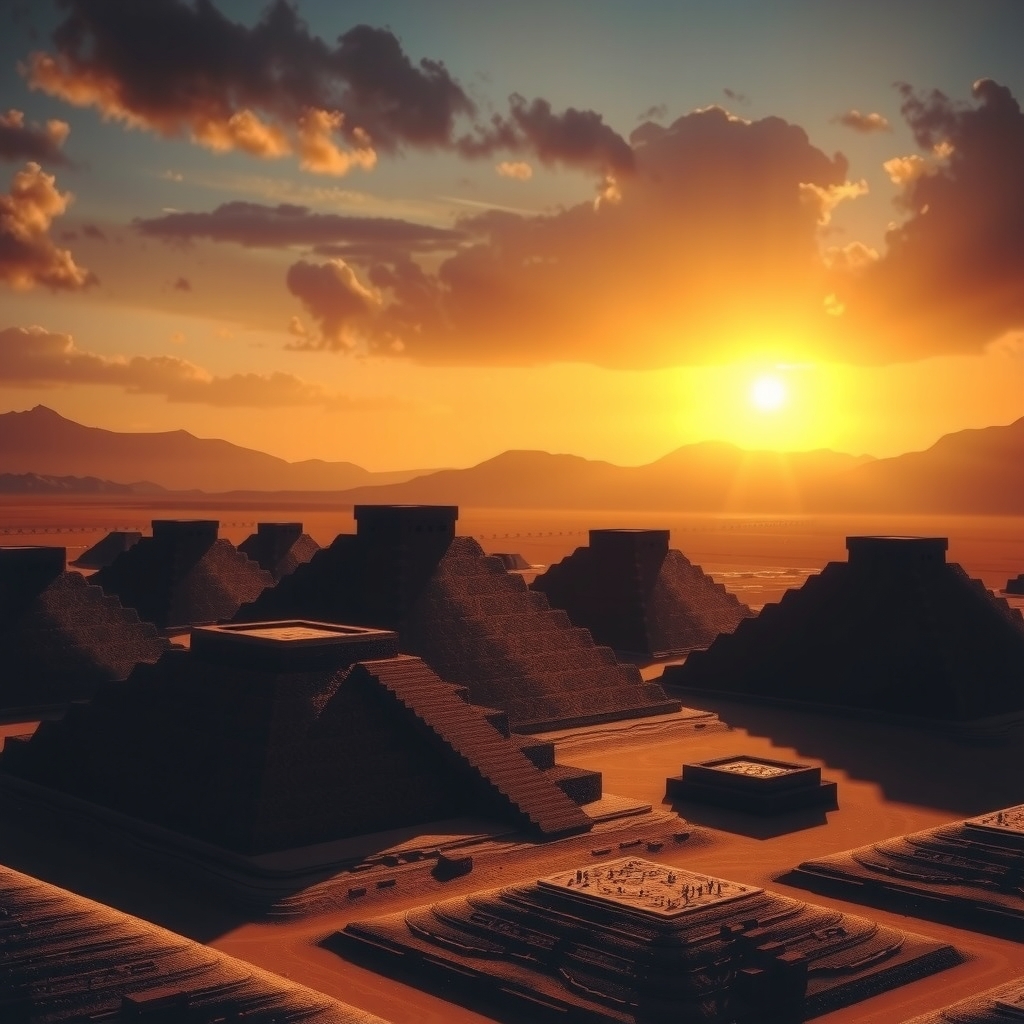
Caral — The Oldest Civilization in the Americas, Still Mostly Buried
Rising from the Supe Valley 5,000 years ago, Caral predates the Maya, the Olmec, and every known complex society in the Western Hemisphere — yet the vast majority of its mounds remain untouched by excavation.
Significance
Why Caral Rewrites the History of the Americas
When radiocarbon dating confirmed in 2001 that Caral's monumental architecture was contemporaneous with the pyramids of Egypt, it shattered long-held assumptions about the Americas being a late-developer in civilization. Caral had urban planning, large-scale agriculture, and sophisticated social hierarchy at a time when most of the world was still dispersed into small farming villages.
The Norte Chico civilization — of which Caral is the largest site — built without ceramics, without writing as we understand it, and with no evidence of warfare in its earliest phases. It represents a genuinely independent origin of civilization, one that challenges Eurocentric models of social complexity.
"Caral demonstrates that the emergence of social complexity was not a singular event passed from one culture to another, but a capacity latent in human communities wherever the conditions aligned."— Ruth Shady Solís, Proyecto Especial Arqueológico Caral-Supe
~5,000 Years Old
Radiocarbon dates place Caral's construction between 3000–1800 BCE, making it the oldest-known urban center in the Americas.
66 Hectares of Urban Space
The central zone alone spans 66 hectares with six large pyramidal platforms, sunken circular plazas, and residential complexes.
No Ceramics, No Warfare
The archaeological record reveals a pre-ceramic society that appears to have organized its complexity around trade and ceremony, not conflict.
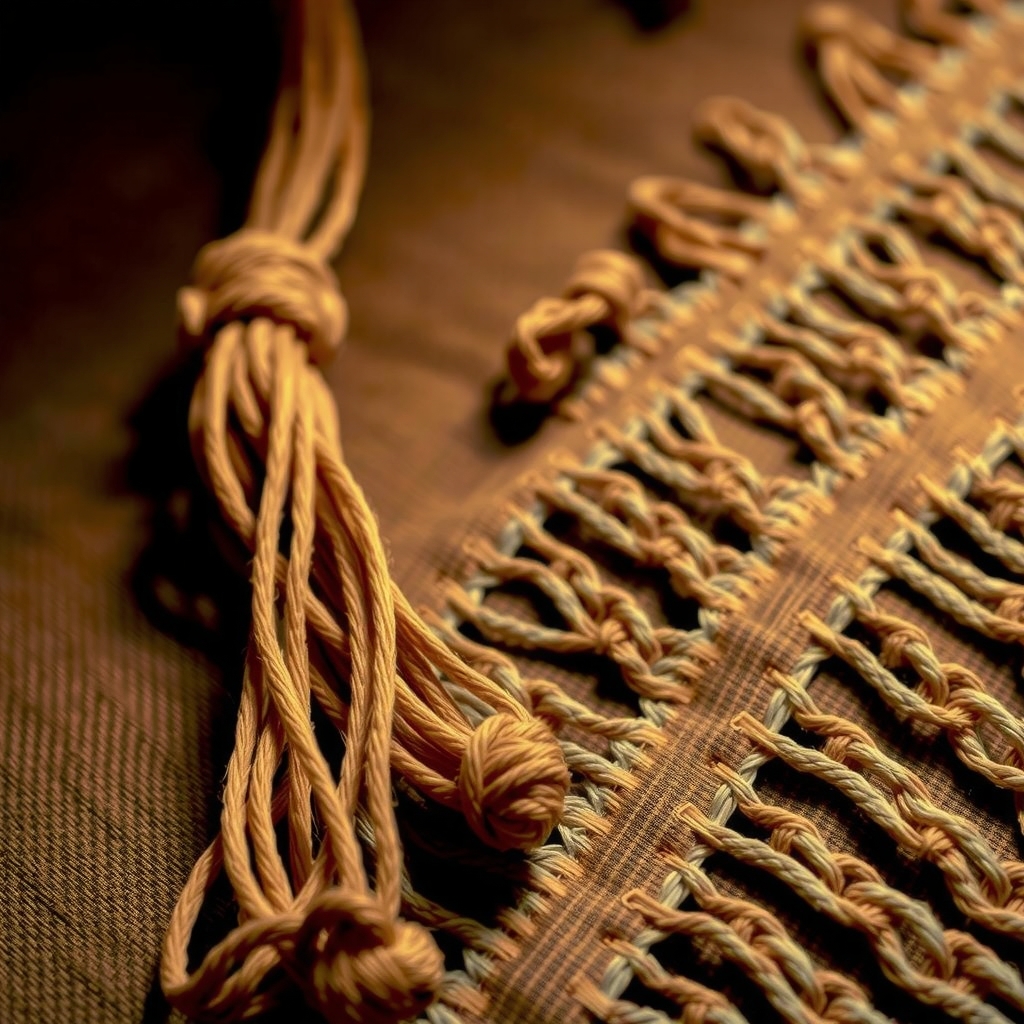
The Quipu Connection
Caral yielded one of the earliest known quipus — knotted string recording devices — suggesting organized information management millennia before the Inca.
Maritime Economy
Despite being 23 km inland, Caral's diet and trade depended on anchovy fishing at the coast — evidence of complex inter-regional exchange networks.
Independent Origin
Caral arose without contact with Old World civilizations, proving that social complexity is not a single historical invention but a universal human capacity.
What Remains Buried
Unexcavated Areas & Ongoing Research
Of the estimated 5,000 km² across the broader Norte Chico region — encompassing roughly 30 major sites — only a fraction has been systematically excavated. Even within Caral's central zone, significant architectural features remain beneath accumulated debris and windblown sediment. Researchers estimate that current excavation covers less than 15% of what the site holds.
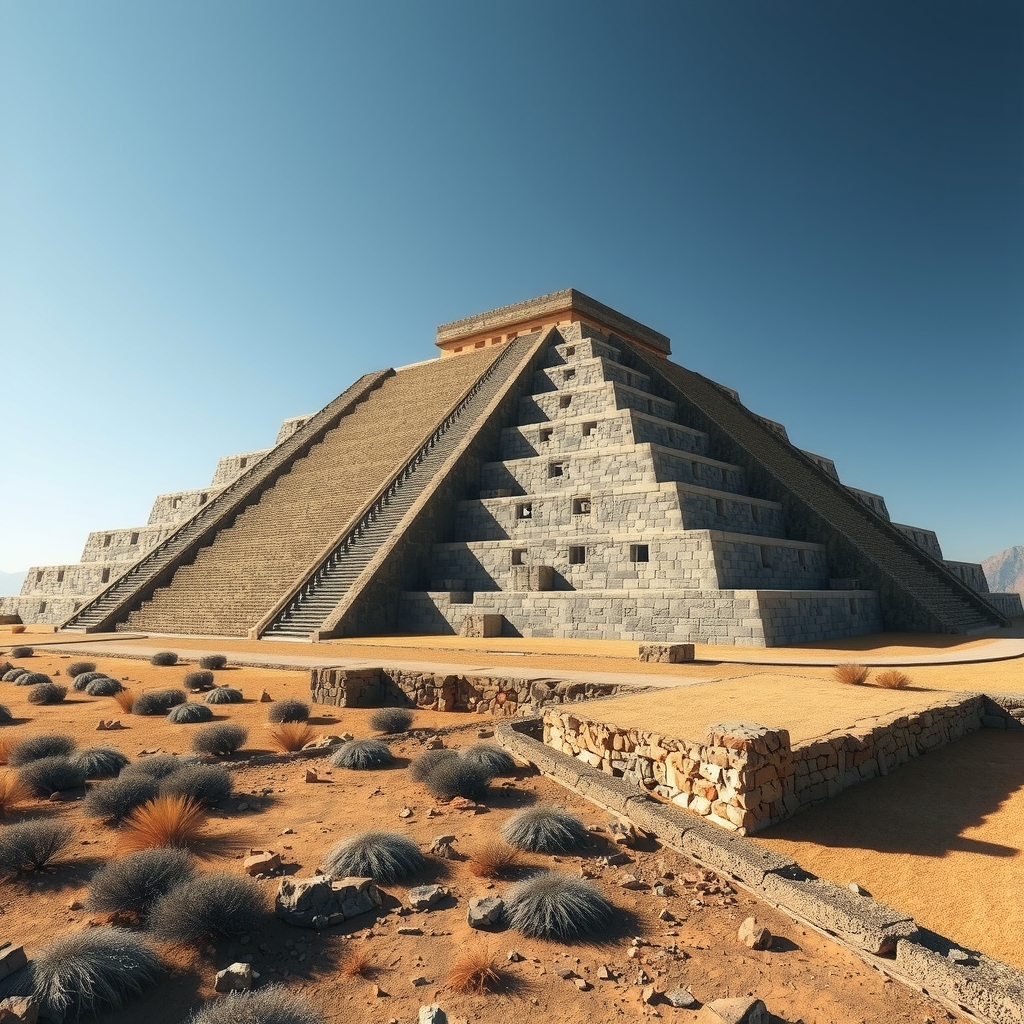
The Northern Periphery Mounds
At least three large earthen mounds on Caral's northern edge have never been excavated. Their scale suggests they may be equivalent in importance to the Pirámide Mayor, the largest known structure at the site.
Residential Sector D & E
The residential areas believed to house Caral's artisan and laboring classes lie under dense sediment. These sectors could reveal the social stratification and daily life of non-elite populations.
The Subterranean Gallery System
Ground-penetrating radar surveys conducted between 2015 and 2019 detected what appear to be subterranean chambers or passages beneath the Amphitheater platform. None have been opened.
Satellite Sites: Chupacigarro & Miraya
Two adjacent Norte Chico sites, Chupacigarro and Miraya, show comparable architectural complexity to Caral but have received minimal excavation due to resource constraints.
The Water Management Infrastructure
Irrigation canals and what may be a reservoir system have been partially traced on the western edge of the city. The full extent of Caral's hydraulic engineering is still unknown.
Funerary Complexes
Scattered burials have been found across the site, but the main funerary precinct — if one exists — has not been definitively located. Burial customs of the elite remain largely undocumented.
Excavation History
From Looters' Pits to UNESCO Recognition
Caral's modern archaeological story is one of persistence against neglect, looting, and institutional skepticism. For decades, scholars dismissed the site as a collection of barren hills. It took the determination of a single Peruvian archaeologist to force the world to reckon with what lay beneath.
"For too long, Caral was invisible — not because it was hidden, but because no one was willing to look."— Jonathan Haas, Field Museum, Chicago
Max Uhle's Survey
German archaeologist Max Uhle mentions mounds in the Supe Valley but misidentifies them as natural formations or post-ceramic ruins. No excavation follows.
Paul Kosok's Aerial Survey
Kosok photographs the Supe Valley from the air and notes the scale of earthworks but does not pursue investigation. The site remains on the margins of Andean scholarship.
Guillermo Ganoza Vargas
A Peruvian architectural study notes ancient construction techniques at Caral. Small-scale digging begins but is halted. The pre-ceramic nature of the site is not recognized.
Ruth Shady Solís Begins Work
Peruvian archaeologist Ruth Shady Solís of San Marcos University begins systematic excavation. She immediately recognizes the monumental architecture's significance and begins the long process of dating and documentation.
Science Publication Changes Everything
Shady, Haas, and Creamer publish radiocarbon dates in Science confirming Caral's age. The paper establishes Caral as the oldest urban center in the Americas and triggers global scholarly and media attention.
UNESCO World Heritage Inscription
Caral is inscribed as a UNESCO World Heritage Site under the name "Sacred City of Caral-Supe," providing increased protection and international funding support.
Remote Sensing & New Discoveries
LiDAR and ground-penetrating radar surveys begin revealing subsurface structures. Multiple previously unknown architectural features are detected in unexcavated sectors, confirming that the known site represents a fraction of what exists.
Chronology
Caral Through Time
Proto-Urban Settlement in the Supe Valley
Small fishing and farming communities begin occupying the Supe Valley coastal and inland zones, establishing the foundation for Norte Chico complexity.
Monumental Construction Begins at Caral
Large-scale platform mound construction begins. The Pirámide Mayor — 18 meters tall — is among the earliest phases. Public architecture suggests centralized labor organization.
Peak Urban Complexity
Caral reaches its greatest extent. Population estimates range from 1,000 to 3,000 residents in the central zone, with thousands more across the networked valley sites.
Regional Decline Begins
Evidence suggests climatic shifts and possible seismic activity begin disrupting the agricultural and coastal trade systems that supported Norte Chico urbanism.
Abandonment of Caral
Caral is gradually abandoned. Researchers debate whether population relocated south toward the Rimac Valley, eventually contributing to subsequent Andean civilizations.
Caral Enters the Archaeological Canon
The Science publication by Shady, Haas, and Creamer formally establishes Caral's position as the foundational urban civilization of the Americas.
Academic Sources
Citations & Research References
- Shady, R., Haas, J., & Creamer, W. (2001). "Dating Caral, a Preceramic Site in the Supe Valley on the Central Coast of Peru." Science, 292(5517), 723–726. doi:10.1126/science.1059519
- Haas, J., Creamer, W., & Ruiz, A. (2004). "Dating the Late Archaic occupation of the Norte Chico region in Peru." Nature, 432, 1020–1023.
- Shady Solís, R. (2006). La Ciudad Sagrada de Caral-Supe: Los Orígenes de la Civilización Andina y la Formación del Estado Prístino en el Antiguo Perú. Proyecto Especial Arqueológico Caral-Supe/INC, Lima.
- Mann, C. (2005). 1491: New Revelations of the Americas Before Columbus. Alfred A. Knopf. [Chapter on Norte Chico origins, pp. 199–212]
- Moseley, M. E. (2001). The Incas and Their Ancestors: The Archaeology of Peru (2nd ed.). Thames & Hudson. [Caral in regional context, pp. 93–100]
- Creamer, W., Ruiz, A., & Haas, J. (2007). "Archaeological Investigation of Late Archaic Sites (3000–1800 BC) in the Pativilca Valley, Peru." Fieldiana: Anthropology, 40, 1–78.
- UNESCO World Heritage Centre (2009). "Sacred City of Caral-Supe." WHC Nomination File No. 1269. whc.unesco.org/en/list/1269
The Work Continues
The Ground Beneath Caral Has More to Say
Hundreds of sites across the Norte Chico network remain unexamined. Every season, archaeologists uncover evidence that reshapes what we thought we knew about civilization's beginnings. Follow the excavation.