
Global Registry · Continuously Updated
Every Unexcavated Site,
Documented.
A living archive of known but unexcavated archaeological and geological wonders — classified, mapped, and catalogued for researchers, explorers, and the curious alike.
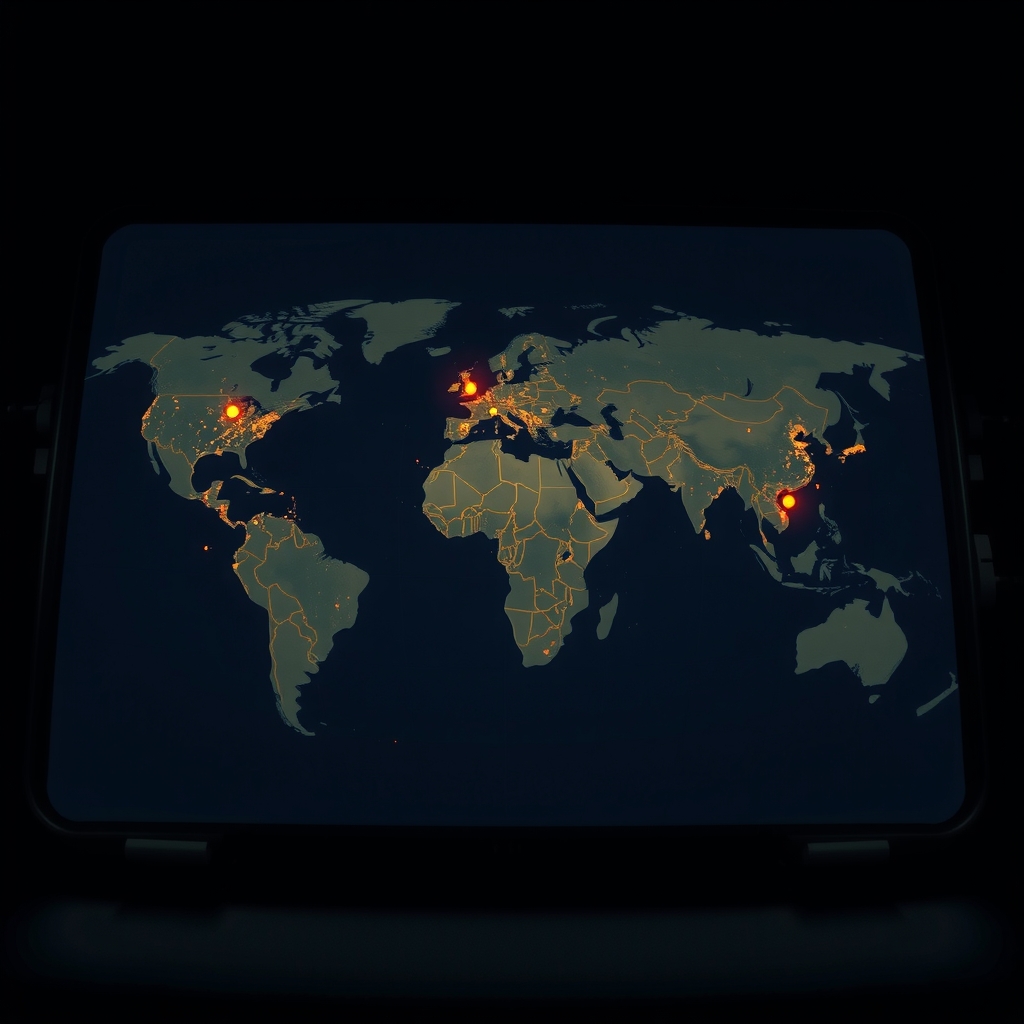
Interactive Registry
Sites Across Every Continent
Browse our global archive filtered by region, era, mystery class, or survey method. Every pin represents a site awaiting excavation.
Filter the Archive
Visual Registry
Explore the Archive
 Critical Depth
Turkey · Middle East
Göbekli Tepe — The Unexcavated Layers
Only an estimated 5% of this 12,000-year-old megalithic complex has been uncovered. The remaining 95% of the hill conceals structures, chambers, and inscriptions that may fundamentally rewrite human prehistory.
Explore Full Record →Egypt · Africa
Beneath the Giza Plateau
Seismic surveys have revealed cavities and corridors beneath the plateau never accessed. Their extent and purpose remain entirely unknown.
View Mystery File →China · East Asia
Emperor Qin's Inner Chamber
The sealed burial complex of China's first emperor remains unopened. Ancient texts describe rivers of mercury and traps still active within.
View Mystery File →Peru · South America
Subterranean Caral Networks
Groundpenetrating radar beneath the ancient city of Caral has detected an extensive underground passage system, unsurveyed and uncharted.
Explore Full Record →Cambodia · Southeast Asia
Angkor's Hidden City Below
LiDAR imaging has revealed a dense urban grid beneath the jungle canopy surrounding Angkor Wat — larger than the visible ruins above.
Explore Full Record →Turkey · Middle East
Derinkuyu Deep Levels
The deepest levels of this ancient underground city in Cappadocia have never been explored. Geophysical surveys suggest further floors extending far below the known 18.
View Mystery File →Mexico · Central America
Teotihuacan — The Liquid Mercury Chambers
Beneath the Pyramid of the Feathered Serpent, tunnels lead to sealed chambers filled with liquid mercury, mirroring a cosmological map never fully interpreted.
Explore Full Record →Greece · Mediterranean
Antikythera Shipwreck — Unrecovered Sections
The wreck site still holds unearthed sections. Expeditions have identified objects in sediment that remain untouched — possible companions to the famous mechanism.
View Mystery File →Featured Site Detail Preview
Record Deep-Dive
Göbekli Tepe Subsurface
Turkey · UNESCO Heritage · Active Research Zone
The vast majority of this 12,000-year-old complex lies beneath deliberately deposited fill. What has been uncovered represents only the earliest phase of construction — archaeologists believe earlier, larger structures exist below.
Non-invasive ground-penetrating radar surveys completed in 2018 mapped at least 16 additional ring-like structures beneath the surface, some exceeding those already excavated in scale.
Coordinates
37°13′23″N 38°55′21″E
Estimated Unexcavated Area
~90 acres undisturbed
Mystery Classification
Critical — Origin of Civilization Implications
Subsurface Depth Estimate
Data Confidence
Last Survey Update
2023 — German Archaeological Institute
Submit Additional Data →The Archive Grows With You
Know a Site That
Isn't Here Yet?
Our database is only as complete as the community behind it. Researchers, field archaeologists, and curious minds: submit new sites, updated survey data, or corrections to existing records.
Provenance & Method
Data Sources & Methodology
Every entry in the Unexcavated database is drawn from verifiable academic, institutional, or peer-reviewed sources. We document known sites — not speculation. All mystery classifications are based on confirmed survey data and published research.
Academic Journals
Primary sourcing from Journal of Archaeological Science, Antiquity, and comparable peer-reviewed publications.
Remote Sensing Data
LiDAR surveys, satellite imagery analysis, and ground-penetrating radar results from institutional expeditions.
UNESCO Records
World Heritage Site documentation and protected area filings that reference subsurface extent and survey history.
Field Submissions
Verified reports from archaeologists and researchers working at active or pending excavation sites worldwide.
National Archives
Government survey records and protected site databases from 67 participating national heritage bodies.
Geophysical Surveys
Published magnetometry, seismic refraction, and electrical resistivity tomography studies informing depth estimates.
Methodology note: Sites are classified using a tiered mystery index: Critical (civilization-redefining potential), High (significant historical implications), and Moderate (documented, awaiting resources). Classifications are reviewed annually. The Unexcavated database does not publish site coordinates for protected locations where disclosure could risk unauthorized disturbance.